Click it before you build it.
Realistic, interactive prototypes that let users, stakeholders and developers experience your product — while changing it still costs hours, not sprints.
The cheapest usability test you'll ever run.
A prototype answers questions that static designs can't. Does the flow make sense when you actually click through it? Does the navigation feel where it should? Does anyone understand this screen at speed? A week of prototyping routinely saves months of rebuilding.
We build prototypes at whatever fidelity the question demands — quick wireframe flows for early validation, or near-final interactive builds with real transitions and states for testing, demos and developer reference.
Every prototype is built to be used: shared as a link, tested on real devices, and iterated on the same week if the findings demand it.
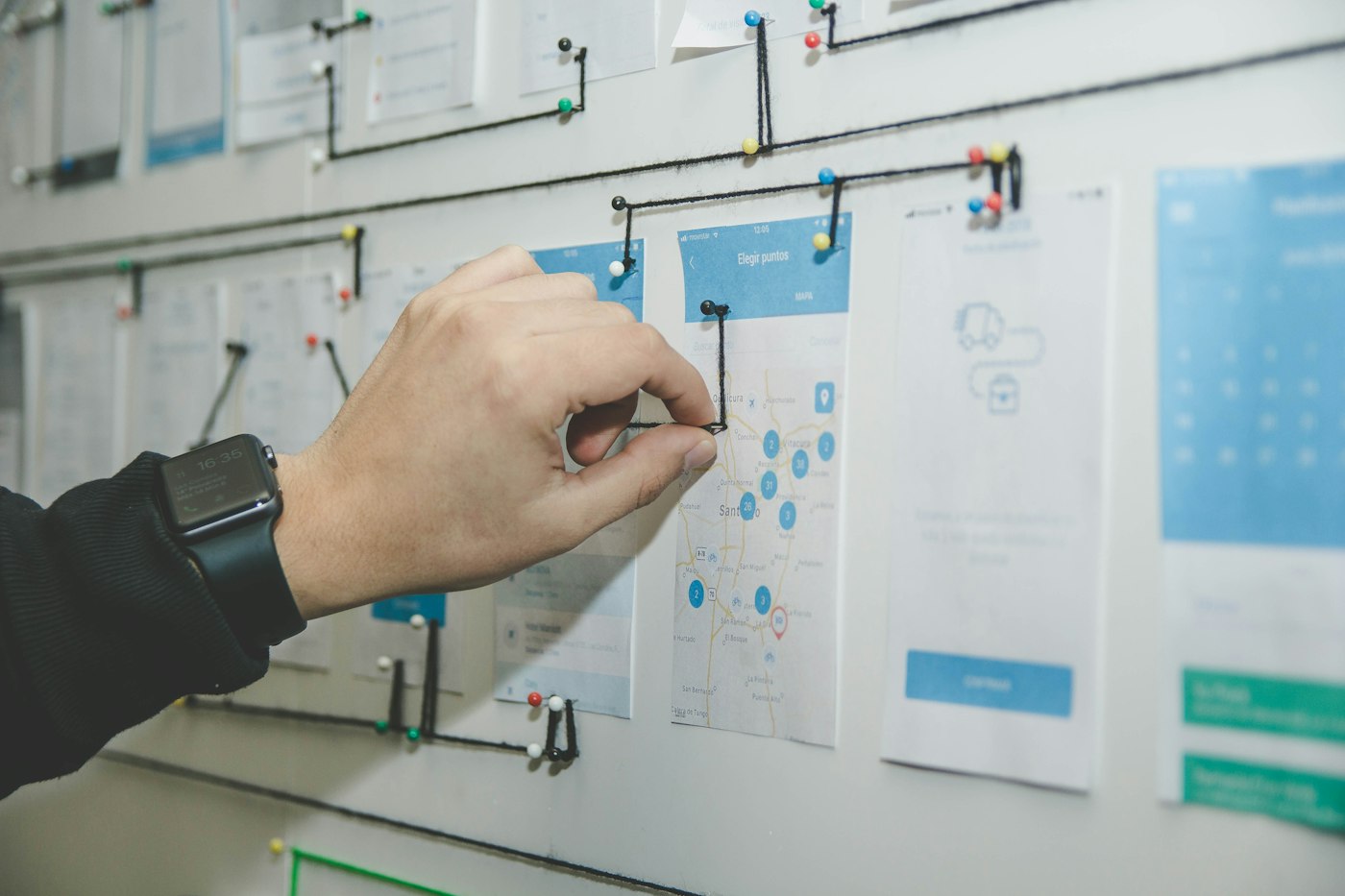
What a prototype prevents.
Stakeholders can't picture the product
Static screens make people guess. A clickable prototype turns vague approval into informed sign-off — and surfaces objections early.
Developers misread the intent
Annotations only go so far. An interactive prototype shows exactly what should happen — transitions, states and all.
Flaws surface after launch
The worst time to discover a broken flow is in production reviews. Testing a prototype finds it while the fix is still a drag-and-drop.

What's included.
- Flow selectionWe identify which journeys are worth prototyping — testing everything wastes budget, testing the riskiest flows doesn't.
- Linked, interactive screensHigh-fidelity screens connected into realistic tap-through flows with real transitions and overlays.
- Micro-interactionsMeaningful motion — state changes, reveals and feedback — designed to communicate, not decorate.
- Test-ready deliverableA shareable prototype link that runs on desktop and mobile, ready for moderated or self-guided testing.
- Iteration roundPost-test refinements folded back into the prototype so findings translate into visible changes.
- Developer referenceThe prototype stays live as a behavioural spec — the definitive answer to "what should this do?"
From static screens to a testable product.
Pick the flows
We agree which journeys carry the most uncertainty — that's where prototype effort goes. Usually three to five core flows.
Build the prototype
Screens are linked with real transitions, overlays, inputs and states — close enough to reality that testers stop noticing it's not built.
Test & observe
Run it yourself or add a moderated usability testing round (A$1,600) — watching real users attempt real tasks is where the insight lives.
Refine
Findings are folded back into the design and the prototype updated — so the final artefact reflects what testing actually proved.
Prototyping rates, published.
Wireframing — A$1,500 per flow set
Interactive Prototyping — A$1,200
Usability Testing round — A$1,600
Common questions about prototyping.
Prove the idea before you pay to build it.
Send us your screens or describe the flow. We'll scope the prototype, quote it fixed and have something clickable in your hands fast.